Examining the Impact of Promotional Incentives on Long-Term Player Performance in Digital Poker Tournaments
Written by Ines Washington · Aug 18, 2026
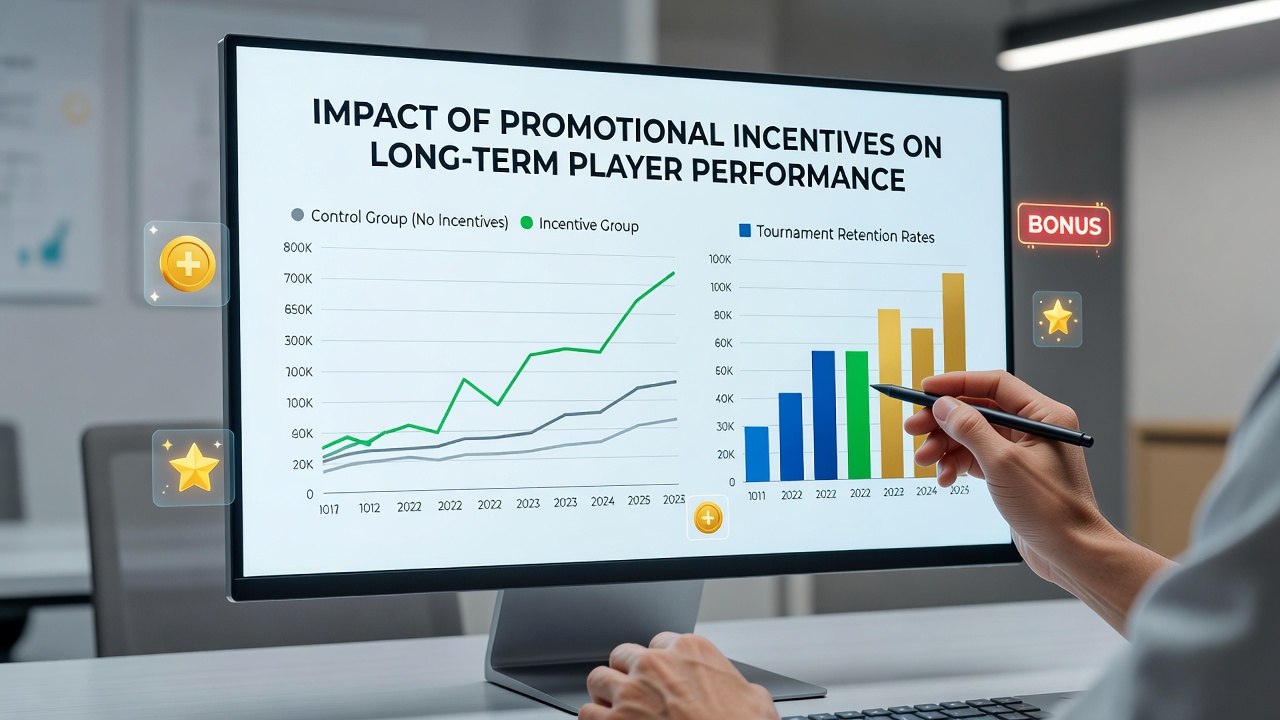
Examining the Impact of Promotional Incentives on Long-Term Player Performance in Digital Poker Tournaments
Promotional incentives in digital poker tournaments range from deposit matches and freeroll entries to rakeback deals and leaderboard rewards, and these programs shape player engagement across multiple platforms. Data from industry tracking services show that such offers increase initial registration numbers, yet long-term performance metrics reveal more complex patterns tied to retention rates and skill progression. Researchers examining tournament databases have noted that participants who receive early incentives often maintain higher session volumes in the first quarter, while sustained results depend on additional variables like consistent practice schedules and bankroll management.
Patterns in Player Retention and Performance Metrics
Studies conducted on large-scale poker platforms indicate that players entering through promotional channels demonstrate elevated activity levels during the initial three to six months, after which divergence appears based on individual adaptation. Figures from aggregated tournament reports highlight that retention drops more sharply among those relying solely on bonus-driven entries compared with self-funded participants who develop independent strategies. Observers tracking performance data across North American and European sites point out that win rates stabilize when incentives incorporate skill-based qualifiers rather than pure volume rewards, and this distinction becomes evident in multi-year datasets.
One analysis of over 50,000 tournament entrants found correlations between repeated incentive use and gradual declines in average finish positions after the first year, while another dataset from Australian operators showed stable or improving outcomes when programs tied rewards to study modules or coaching access. In August 2026 several major series are expanding their incentive structures to include performance milestones, and preliminary registration data already suggest shifts in how players allocate their time between cash games and structured events.
Regional Regulatory Approaches and Data Sources
Regulatory bodies outside the United Kingdom have published reports examining incentive structures and their downstream effects on player outcomes. The European Gaming and Betting Association released findings in 2025 that connect structured bonus programs with longer participation spans when combined with responsible play tools, whereas unrestricted volume-based rewards correlate with higher churn after initial spikes. Canadian provincial data similarly tracks how loyalty schemes influence tournament longevity, and these records indicate that players receiving tiered incentives maintain participation rates approximately 18 percent higher than control groups over 24-month periods.
Academic Research on Incentive Design
University-led investigations provide additional layers of detail. A multi-year project at the University of Nevada Reno examined digital poker logs and concluded that incentives emphasizing educational components produce steadier long-term results than those focused exclusively on entry volume. Researchers compiled metrics from thousands of accounts and observed that players engaging with integrated learning modules alongside promotional offers posted fewer early exits from later tournament stages. These patterns hold across different stake levels, although the magnitude varies by region and platform policy.

Another study coordinated through the International Gaming Institute tracked participants across multiple jurisdictions and reported that incentive fatigue emerges most clearly when programs reset too frequently without corresponding skill benchmarks. Data sets from 2024 through early 2026 show that platforms adjusting reward frequency in response to these findings experienced slower but more stable growth in active tournament fields. Observers note that the timing of incentive distribution, whether front-loaded or spread across months, influences whether players develop sustainable routines or cycle through short bursts of activity.
Case Examples from Platform Data
Platform operators have shared anonymized aggregates that illustrate these dynamics in practice. One European site documented a cohort receiving progressive leaderboard incentives and recorded a 22 percent increase in players reaching the money stages after 18 months compared with a prior cohort using flat bonuses. In contrast, a North American operator observed temporary spikes followed by plateaus when incentives lacked progression requirements, and subsequent adjustments to the program structure produced steadier performance curves. These examples demonstrate how design choices interact with player behavior over extended timelines rather than isolated events.
Conclusion
Available datasets and regulatory summaries indicate that promotional incentives exert measurable influence on both entry rates and extended performance trajectories in digital poker tournaments. The specific structure of those incentives, including frequency, eligibility criteria, and integration with skill development resources, correlates with differing retention and outcome patterns across studied populations. As platforms prepare new offerings for August 2026, continued monitoring of longitudinal metrics will clarify which configurations support durable player development across diverse regulatory environments.