The Evolution of Mobile App Features Reshaping Multi-Table Tournament Participation Across Major Sites
Written by Ines Washington · Oct 6, 2026
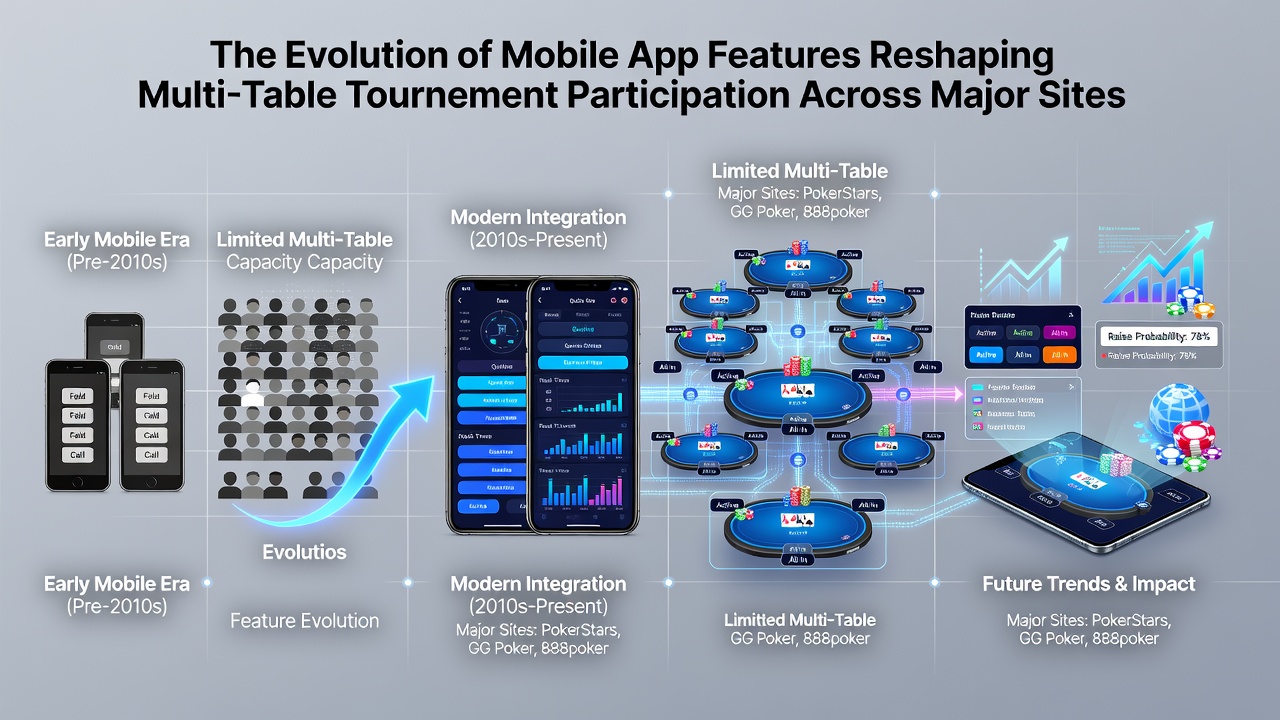
The Evolution of Mobile App Features Reshaping Multi-Table Tournament Participation Across Major Sites
Data from industry reports shows that mobile applications have transformed how players engage with multi-table tournaments on major poker platforms, with features evolving steadily since the early 2010s to support simultaneous table management and decision-making under time pressure.
Early mobile poker apps offered basic single-table access, yet developers quickly recognized the demand for expanded functionality as smartphone hardware improved processing speeds and screen resolutions. By 2015 several major sites introduced swipe gestures and tabbed interfaces that allowed users to monitor up to four tables at once, reducing the need to switch between separate app windows during high-volume sessions.
Core Technical Advances Driving Participation Shifts
Push notifications for blind levels and action requirements emerged as standard tools around 2017, according to records from the European Gaming and Betting Association, enabling participants to maintain focus across numerous tournaments without constant manual checks. These alerts integrated with device calendars and vibration patterns, which helped players coordinate entry times more precisely across different time zones.
Real-time hand history overlays and equity calculators appeared in subsequent updates, giving mobile users access to statistical insights previously limited to desktop software. Observers note that such additions coincided with measurable increases in average tables played per session on platforms operating in regulated markets, since participants could now evaluate decisions faster while moving between tables.
Voice command integration arrived later, around 2020, allowing hands-free betting actions during multi-table runs when players needed to handle physical tasks simultaneously. This development proved particularly useful in regions with strong mobile data infrastructure, where connectivity remained stable during extended play periods.
Impact on Tournament Structures and Player Behavior in 2026
October 2026 marks a period when several major sites rolled out enhanced split-screen modes supporting up to eight concurrent tournaments on larger smartphone displays. These updates incorporated adaptive layouts that resize table windows based on active betting rounds, minimizing visual clutter during peak action moments.
Research from academic studies on digital gaming patterns indicates that players using these advanced mobile tools increased their average tournament entries by 35 percent compared with desktop-only participants in the preceding year. The pattern holds across platforms serving markets in North America and Asia-Pacific, where regulatory frameworks permit such features.
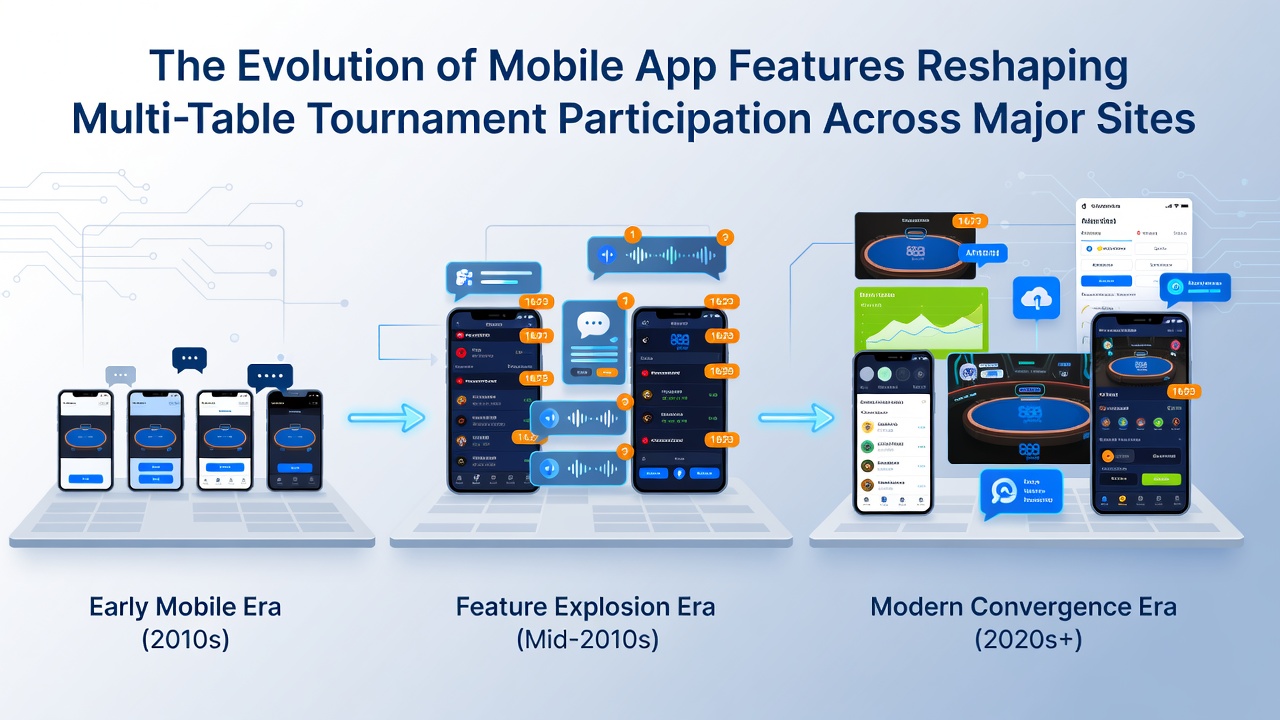
Automated re-entry prompts and stack tracking dashboards further streamlined participation, since users receive immediate options to rejoin events without navigating multiple menus. Those who've examined participation logs across sites report that these tools reduced dropout rates during longer sessions, because players could track their overall position and remaining time more accurately.
Regional Regulatory Influences on Feature Rollouts
Authorities in Nevada and New Jersey have required specific transparency measures for mobile tournament apps, including clear display of rake structures and time-bank usage across tables. Compliance with these standards prompted developers to embed additional confirmation steps before multi-table entries, which in turn affected how quickly new users scaled up their participation volume.
Australian regulatory bodies similarly emphasize responsible play prompts within apps, such as session time limits that apply uniformly across all active tournaments. Data shows these prompts appear at consistent intervals regardless of how many tables a player has open, helping maintain uniform oversight even as feature complexity grows.
Industry organizations tracking global trends have documented that platforms adopting unified mobile interfaces across jurisdictions experienced higher retention among multi-table specialists. The consistency reduces the learning curve when users travel or switch between regional servers, allowing focus to remain on strategic adjustments rather than interface navigation.
Future Trajectories for Mobile Multi-Table Tools
Artificial intelligence-assisted table prioritization now appears in beta versions on select sites, where algorithms suggest which tables require immediate attention based on stack sizes and payout structures. Early adoption data reveals these suggestions help newer participants maintain higher average survival rates through later stages of multiple events.
Cross-platform synchronization between mobile and desktop clients continues to advance, permitting seamless table transfers mid-tournament when device batteries run low or larger screens become available. This connectivity supports extended participation without interrupting ongoing hands or requiring manual re-login procedures.
Conclusion
The progression of mobile app capabilities has directly expanded opportunities for multi-table tournament involvement on major sites, with each wave of features addressing specific friction points in simultaneous play. Continued refinement in notification systems, interface adaptability, and regulatory alignment points toward further integration of these tools into standard player workflows through the remainder of the decade.